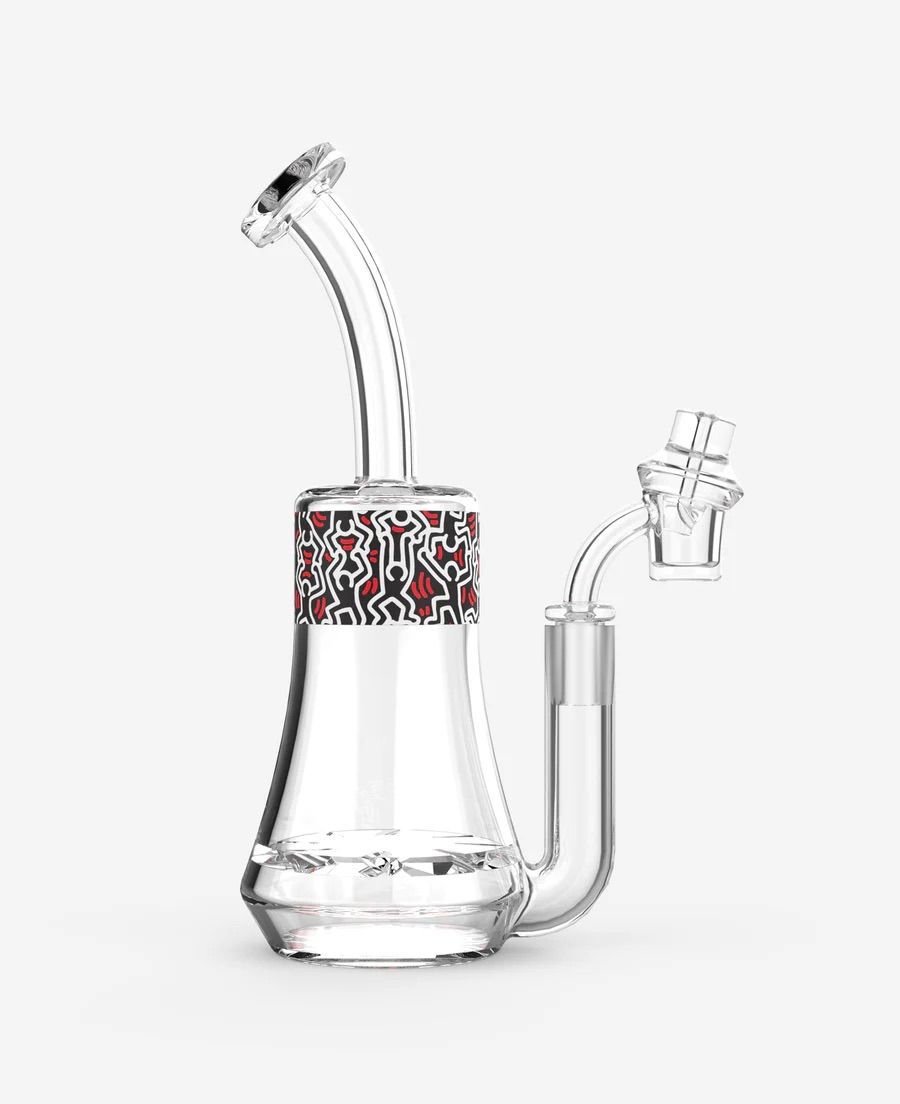
Choosing the right dab rig shapes your entire experience, from how smooth your hits feel to how much time you spend cleaning. Different dab rigs come with different trade-offs, and what works for someone else might not work for you.
At Cannabox, we’ve seen customers struggle with this decision because they didn’t understand their options. This guide breaks down the main types so you can match a rig to your actual lifestyle and preferences.
Water Filtration Changes Everything
Water filtration separates a mediocre dab session from an exceptional one. When you heat a concentrate to 500–650°F, the vapor that forms is extremely hot and harsh on your lungs. Water filtration cools that vapor before it reaches your mouth by forcing it through a chamber filled with water. The vapor bubbles through the water, losing heat in the process.
A 6–8 inch borosilicate glass rig minimizes vapor loss during this filtration while keeping flavor vibrant, making it the baseline standard for balanced performance. Smaller rigs, around 4–6 inches, preserve more cannabinoids and terpenes because the vapor travels a shorter distance, but the trade-off is hotter, harsher hits. Larger rigs with more complex percolators add extra diffusion, which cools vapor further but can cause some oil to condense on the glass and reduce potency slightly.
Percolator Types Shape Your Experience
The type of percolator matters significantly. Honeycomb percolators create thousands of tiny bubbles for extremely smooth hits, but they’re notoriously difficult to clean. Inline percolators provide strong diffusion and cooling with less maintenance hassle. Tree percolators offer a middle ground between ease of cleaning and vapor cooling.
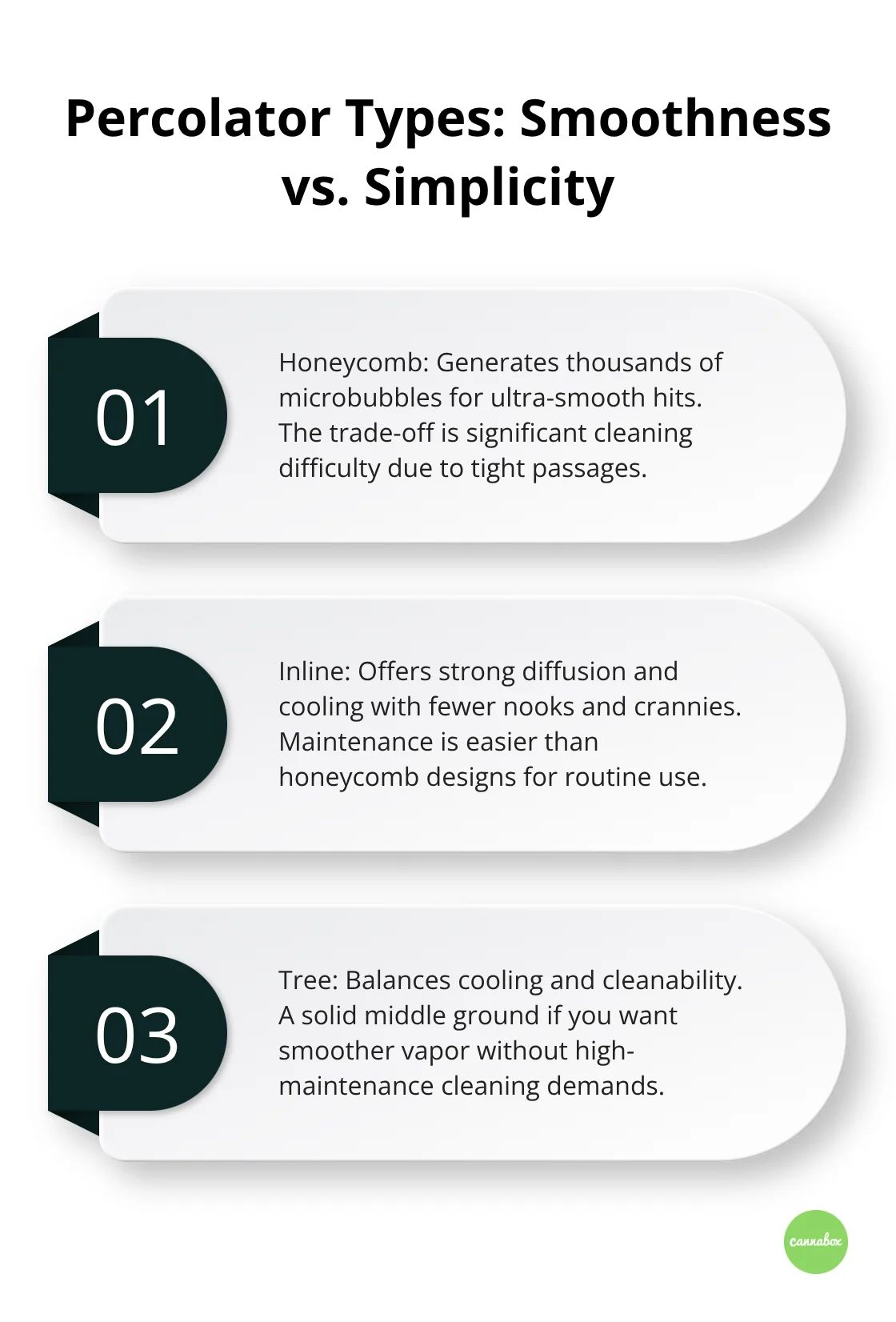
Your choice depends on whether you prioritize smoothness or simplicity.
Lower Temperatures Unlock Better Flavor
Flavor enthusiasts should understand that lower temperatures preserve more terpenes, the aromatic compounds that give concentrates their character. At 500–550°F, you get robust flavor and reasonable potency. At 650°F and above, flavor becomes muted and harsh. A well-maintained glass rig with a quartz banger lets you dial in temperature precisely by timing how long you wait after heating the banger with a torch.
Cold starts, where you apply concentrate to a room-temperature banger and slowly heat it, give you even more control and can improve flavor significantly for softer concentrates like rosin. This method works especially well for users who want maximum terpene preservation without guesswork.
Maintenance Directly Impacts Flavor Quality
Clean rigs deliver dramatically better flavor than dirty ones. A quick wipe after every session with a dry Q-tip while the banger is still warm, followed by isopropyl alcohol, takes 30 seconds and prevents resin buildup that mutes taste. Weekly soaks in warm water mixed with isopropyl alcohol and coarse salt keep your glass performing optimally.
Regular users who dab multiple times weekly should commit to this cleaning schedule because the difference between a clean and neglected rig is unmistakable. The effort you invest in maintenance directly translates to better-tasting hits and longer rig lifespan. However, if you want temperature precision without the torch work and cleaning demands, electronic dab rigs offer a completely different approach that appeals to many users.
Electronic Dab Rigs Beat the Torch-and-Guess Method
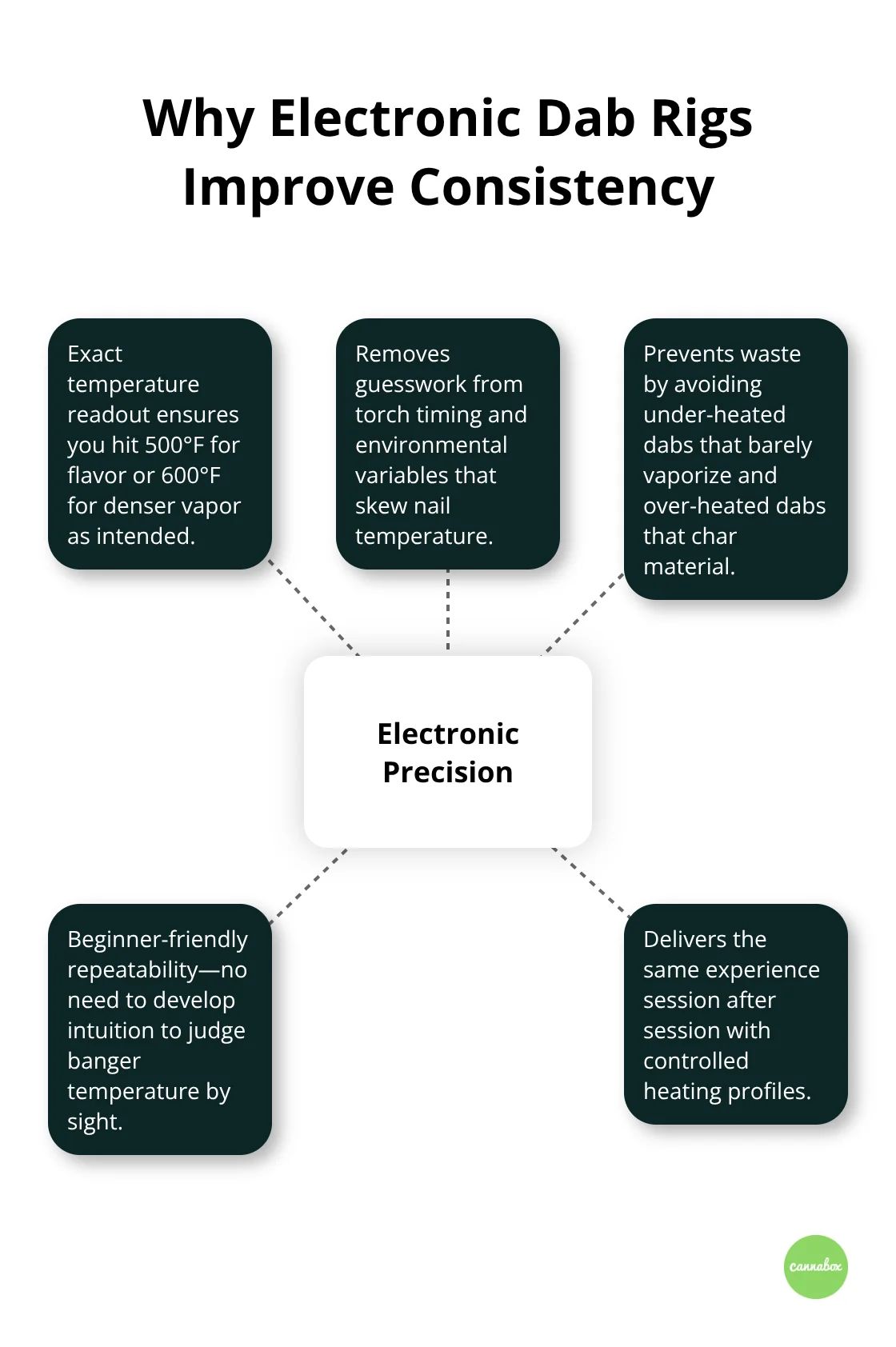
Electronic dab rigs eliminate the guesswork that plagues traditional glass setups. When you heat a banger with a torch, you time it by feel and experience, waiting roughly 45 to 60 seconds after the nail glows red before taking a hit. This approach fails consistently because room temperature, torch quality, and banger thickness all affect actual nail temperature. An electronic dab rig displays the exact temperature on a screen and heats to that precise point every single time. The Puffco Peak Pro 3DXL, for example, features a 3D vaporization chamber with app-controlled temperature settings, letting you dial in 500°F for terpene-rich flavor or 600°F for denser vapor without any manual timing. This consistency matters enormously for beginners who haven’t developed the intuition to judge banger temperature by sight alone. You avoid wasting concentrate on under-heated dabs that barely vaporize and over-heated dabs that char your material and destroy flavor.
Temperature Precision Transforms Your Sessions
Electronic rigs remove the variables that make torch heating unreliable. A traditional setup forces you to estimate when your banger reaches the right temperature, which changes based on ambient conditions and equipment quality. Electronic models heat to exact temperatures and maintain them throughout your session. The Focus V Carta 2 uses a 360-degree heating chamber with Bluetooth connectivity, allowing you to customize heat profiles and repeat the same experience session after session. This repeatability matters most for users who want consistent flavor and potency without the learning curve.
Durability Costs Less Over Time
A traditional glass rig’s banger eventually cracks from thermal shock, and replacing it costs $20 to $40 each time. The heating elements in quality electronic rigs experience controlled, repeatable heating cycles rather than the stress of rapid torch ignition. Over three years of regular use, a traditional setup requires multiple banger replacements, cleaning supplies, and torch fuel, totaling roughly $150 to $200 in maintenance costs. An electronic rig requires occasional atomizer replacement, typically every 6 to 12 months depending on usage, at $30 to $60 per replacement. The upfront cost of an electronic rig ranges from $150 to $400, but the elimination of torch-related expenses and reduced banger replacement frequency means you break even faster than most users expect.
Beginners Skip the Steep Learning Curve
For beginners especially, the learning curve flattens dramatically because you press a button, wait for the display to confirm temperature, and take your hit. You don’t need to master torch technique, calibrate temperature timing, or risk heating your rig unevenly. No open flame means no risk of burning yourself during the heating process. This accessibility makes electronic rigs appealing to users who want to start dabbing without months of practice. However, portability and space constraints matter for many users, which is where portable and tabletop options offer distinct advantages that electronic rigs don’t always provide.
Portable Rigs vs. Stationary Setups
Portability fundamentally changes how often you actually dab. A tabletop electronic rig like the Puffco Peak Pro 3DXL sits on your nightstand or desk and stays there, which means you dab at home consistently. Mini glass rigs and portable e-nails travel with you, which sounds appealing until you realize that moving a rig between locations introduces breakage risk, requires carrying multiple accessories, and demands more frequent cleaning because resin accumulates faster in compact spaces. A 4 to 6 inch mini rig weighs around 8 to 12 ounces and fits in a backpack, but the shorter vapor path that makes mini rigs potent also means resin builds up more quickly in tight spaces, forcing you to clean every two to three sessions instead of weekly. Portable e-nails like the Dr. Dabber Switch 2 eliminate torch dependency, which matters for travel, but battery life typically lasts before requiring a recharge. If you dab once daily at home, a stationary setup makes more practical sense because you eliminate the friction of setup and breakdown.
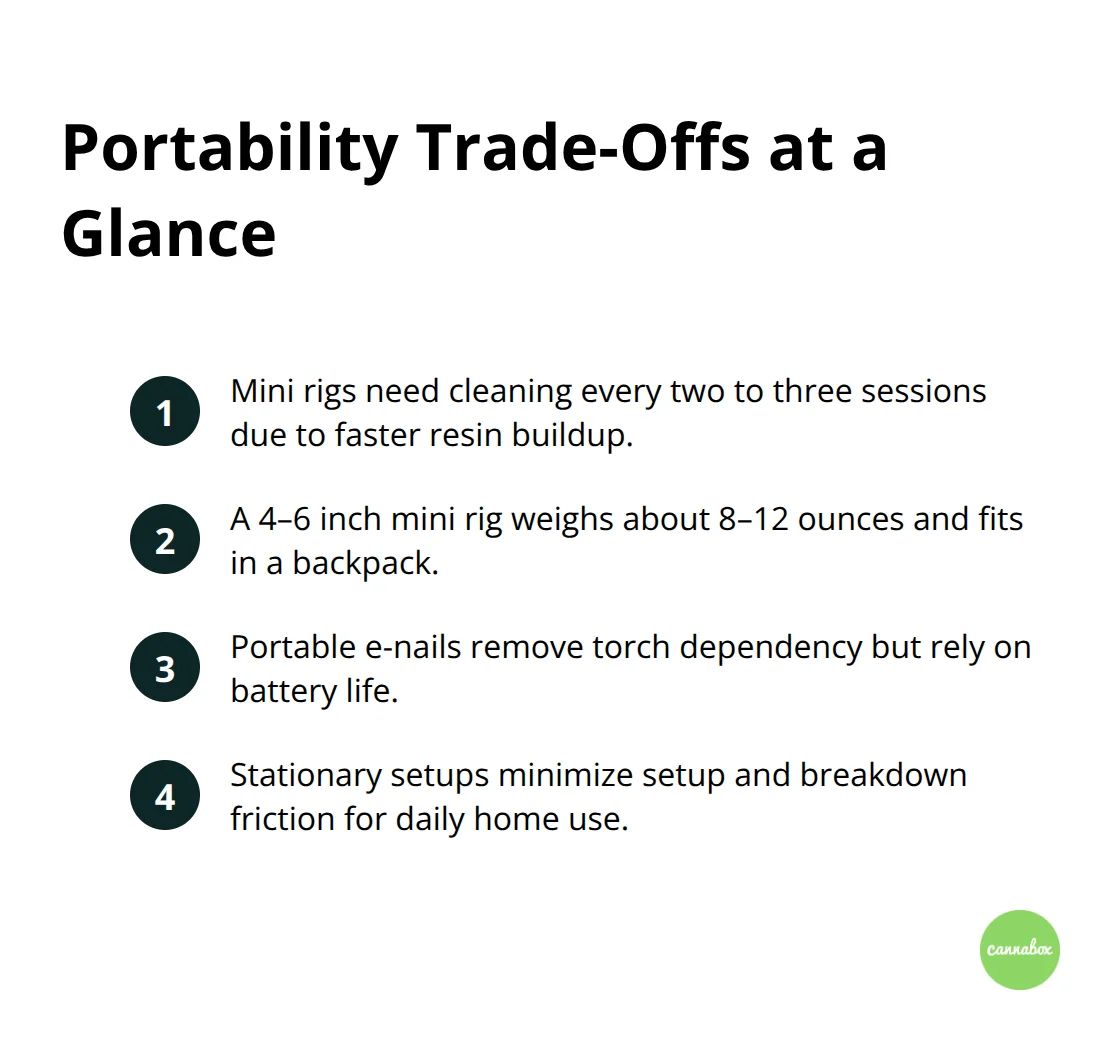
If you dab sporadically across different locations, a portable option prevents your rig from sitting unused for weeks.
Space Constraints Override Preference
A full tabletop setup requires a dedicated flat surface, storage for your torch and accessories, and ventilation to manage the ultrafine particles that dabbing produces. An apartment with limited counter space or shared living situations makes portable options more realistic, even if performance suffers slightly. Silicone rigs solve the durability problem for travel because they resist breakage up to around 500°F, cost $30 to $80 upfront, and tolerate outdoor conditions, but they introduce a temporary rubber taste that fades after a few sessions and require more aggressive cleaning with citric acid or baking soda every two weeks to prevent odor retention.
Nectar Collectors Prioritize Convenience
A nectar collector, the simplest portable option at $20 to $70, lets you sample small amounts of concentrate without carrying full rig infrastructure, but nectar collectors emphasize convenience over flavor depth compared to traditional rigs. This trade-off works well for users who value simplicity and mobility over maximum terpene preservation.
Stationary Rigs Deliver Superior Performance
For regular users who stay in one location, a stationary glass or electronic rig outperforms portability trade-offs because you maintain better temperature control, enjoy superior flavor, and spend less time managing equipment between sessions. The real decision hinges on whether your dabbing happens in one place consistently or across multiple environments throughout your week.
Final Thoughts
Your ideal dab rig depends on three factors: where you dab, how often you dab, and what matters most to you. If you stay home regularly and prioritize flavor, a well-maintained glass rig with precise temperature control delivers the best experience. If you travel frequently or dab in different locations, a portable option like a mini rig or silicone setup prevents your equipment from sitting unused. If consistency and ease matter more than hands-on customization, an electronic rig eliminates the variables that make torch heating unreliable.
Before purchasing, assess your lifestyle honestly. A tabletop electronic rig makes no sense if you dab once weekly at a friend’s place, and a fragile glass rig becomes frustrating if you move it constantly. A silicone rig works perfectly for outdoor use but introduces flavor compromises that flavor enthusiasts won’t accept. Different dab rigs each solve specific problems, and the wrong choice creates friction that discourages regular use. Budget matters too-a quality glass rig costs $60 to $150 upfront, while electronic models range from $150 to $400, and maintenance expenses add up differently depending on your usage pattern.
Start by identifying your primary dabbing location and frequency, then prioritize what enhances your experience most: flavor preservation, temperature consistency, portability, or simplicity. Your answer determines whether you need water filtration, electronic precision, or compact design. Browse our online head shop to explore quality accessories that enhance your setup, or subscribe to our monthly box for themed collections delivered to your door.