
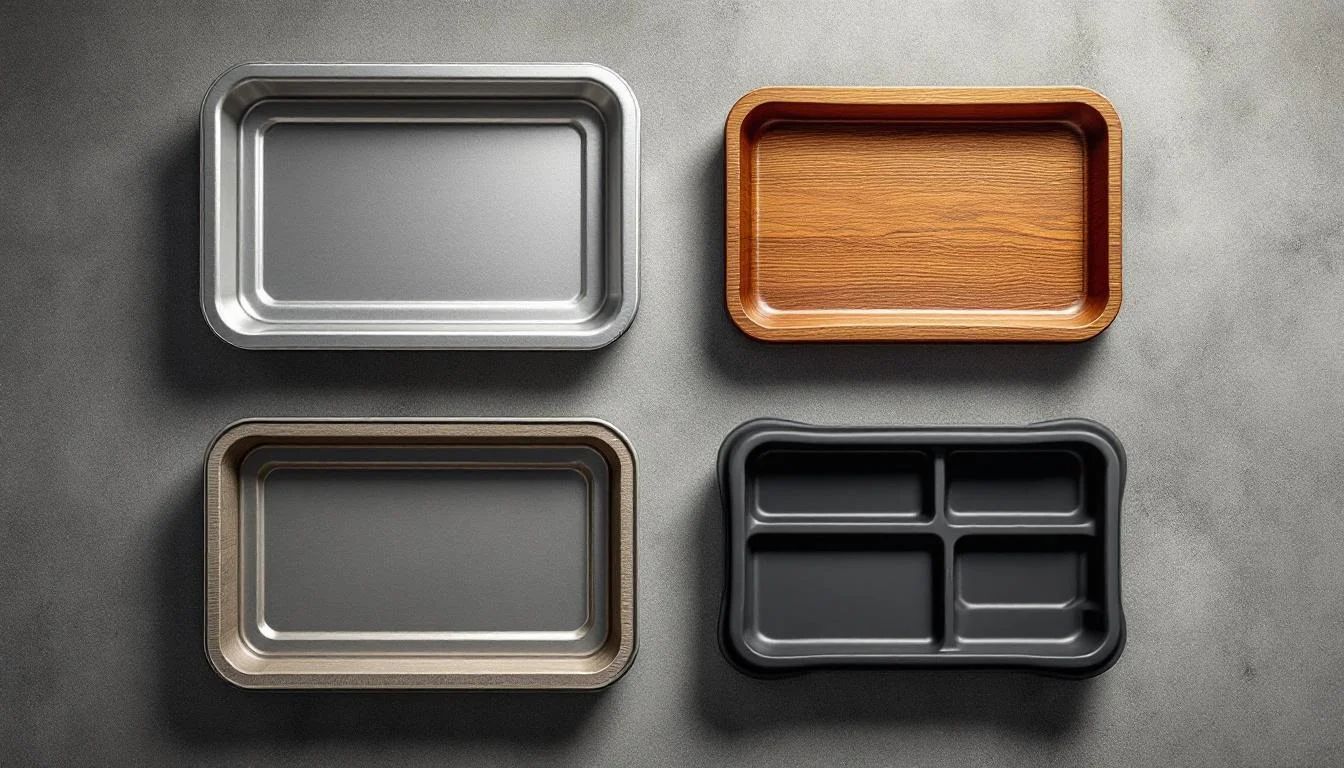
A weed rolling tray is one of those accessories that changes how you actually use cannabis. It keeps everything in one place, prevents spills, and makes the whole process smoother.
At Cannabox, we’ve seen how the right tray can transform your sessions. Whether you care about durability, style, or sustainability, there’s a tray that fits your needs perfectly.
Material Choices for Rolling Trays
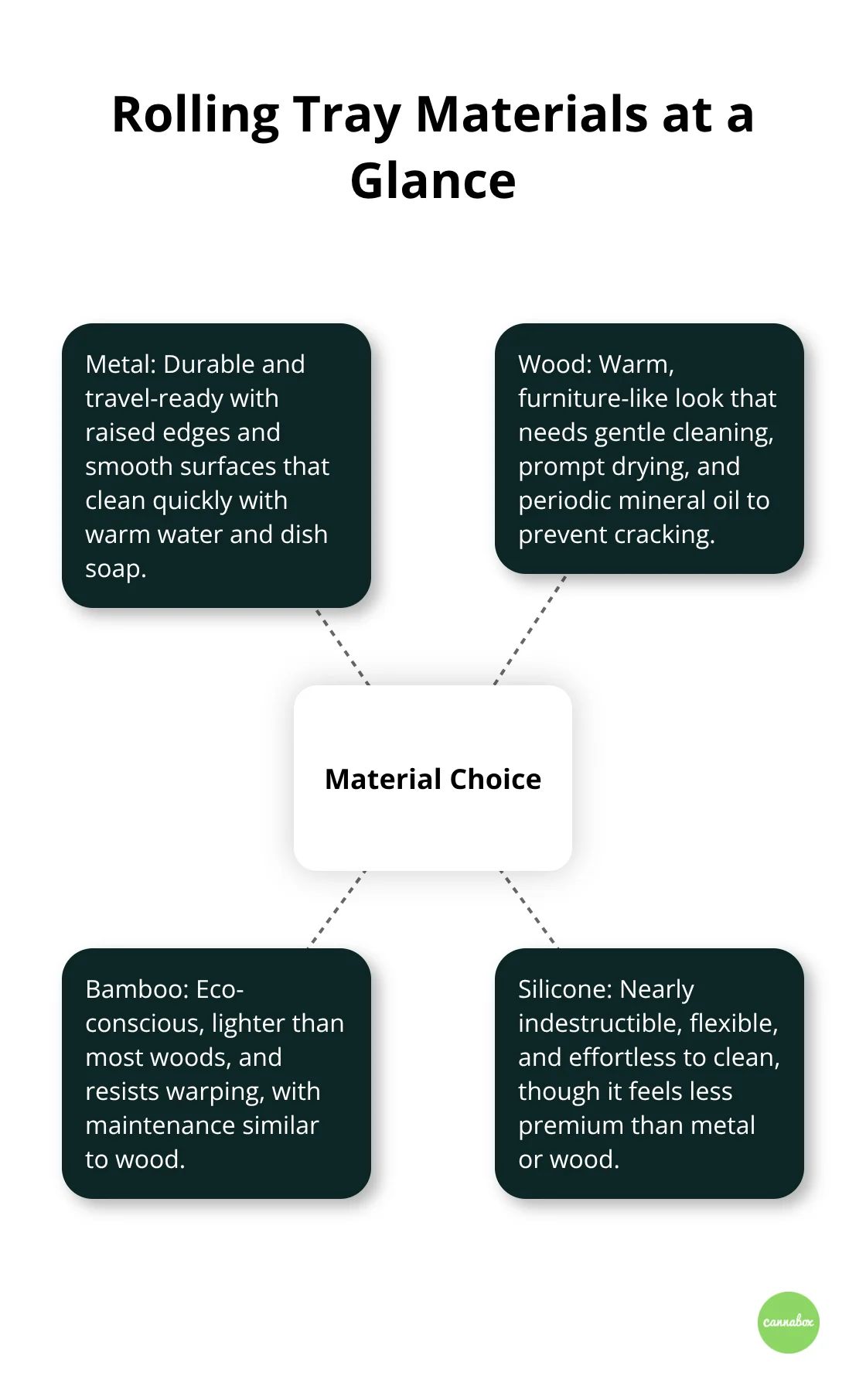
Metal trays dominate the market for good reason. A metal tray with raised edges contains spills effectively, and the smooth surface prevents herb from sticking to corners. If your metal tray has printed graphics, use a light oil to soften resin before washing, then finish with a microfiber cloth to avoid scratches. For bare metal, diluted vinegar or isopropyl alcohol works well. Metal trays won’t crack under pressure, making them ideal if you roll frequently or travel with your setup.
Wooden Trays for Aesthetic Appeal
Wooden trays add warmth to your space but require intentional care. You shouldn’t soak them, and resin buildup needs gentle handling with cooking oil followed by mild soap and minimal water. Dry them promptly and recondition with food-safe mineral oil every few months to prevent cracking. Wood ages with character if you maintain it properly, but neglect leads to permanent damage. Choose this option only if you’re willing to spend five minutes on maintenance after each session. The aesthetic payoff works well in living spaces where you want your rolling station to blend into home décor rather than scream cannabis gear.
Bamboo and Sustainable Materials
Bamboo trays share wooden tray maintenance requirements but offer an eco-conscious angle. They handle daily use better than delicate hardwoods because bamboo resists warping. Bamboo is also lighter than most woods, making it practical for portable setups. The sustainability appeal matters to many users, though durability depends entirely on how you treat it. Eco-friendly silicone trays are nearly indestructible and clean effortlessly, though they feel less premium than metal or wood. Silicone’s flexibility makes it travel-friendly since it won’t shatter or dent, but some users find the material lacks the solid feel of traditional options.
Finding Your Material Match
Your choice comes down to whether you prioritize longevity and ease of care (metal or silicone) or aesthetics and tactile experience (wood or bamboo). Each material serves different rolling habits and living spaces. The next section explores how size and workspace requirements shape your decision just as much as material does.
What Size and Features Actually Matter
Size determines whether your tray becomes a daily tool or an unused shelf decoration. Compact trays around 5 by 7 inches fit backpacks and glove compartments, making them perfect if you roll in different locations or value discretion. Standard trays measuring 7 by 11 to 9 by 12 inches strike the practical balance most users need, offering enough workspace to organize papers, filters, and a grinder without dominating your table. Oversized trays exceeding 12 by 12 inches work only if you have dedicated space and roll in groups regularly. Before buying, measure where the tray will actually live. If you roll while seated, test whether the tray fits comfortably on your lap without tipping or sliding. Many people overlook this step and end up with oversized trays that create frustration rather than convenience.
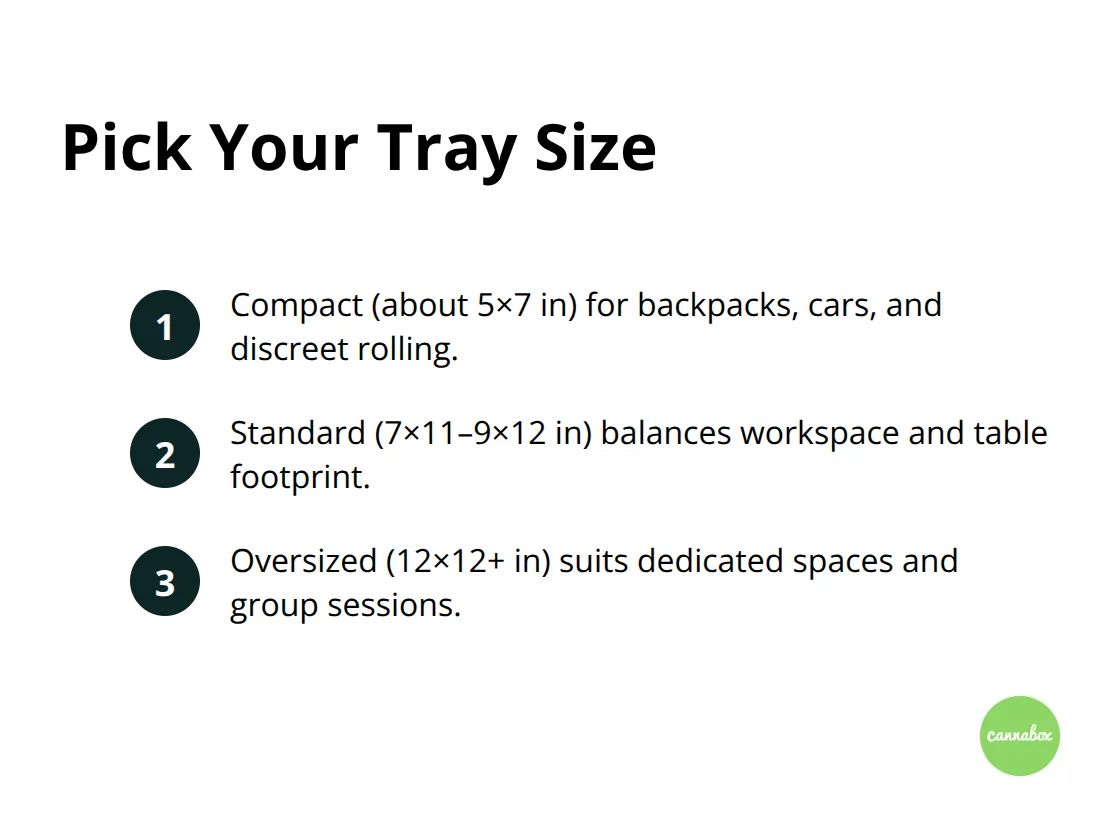
The amount you roll at one time matters too. If you prep single joints, a compact tray suffices. If you grind larger quantities or roll multiple joints in one session, you need the extra surface area a medium or larger tray provides.
Curved Edges and Raised Walls Contain Your Product
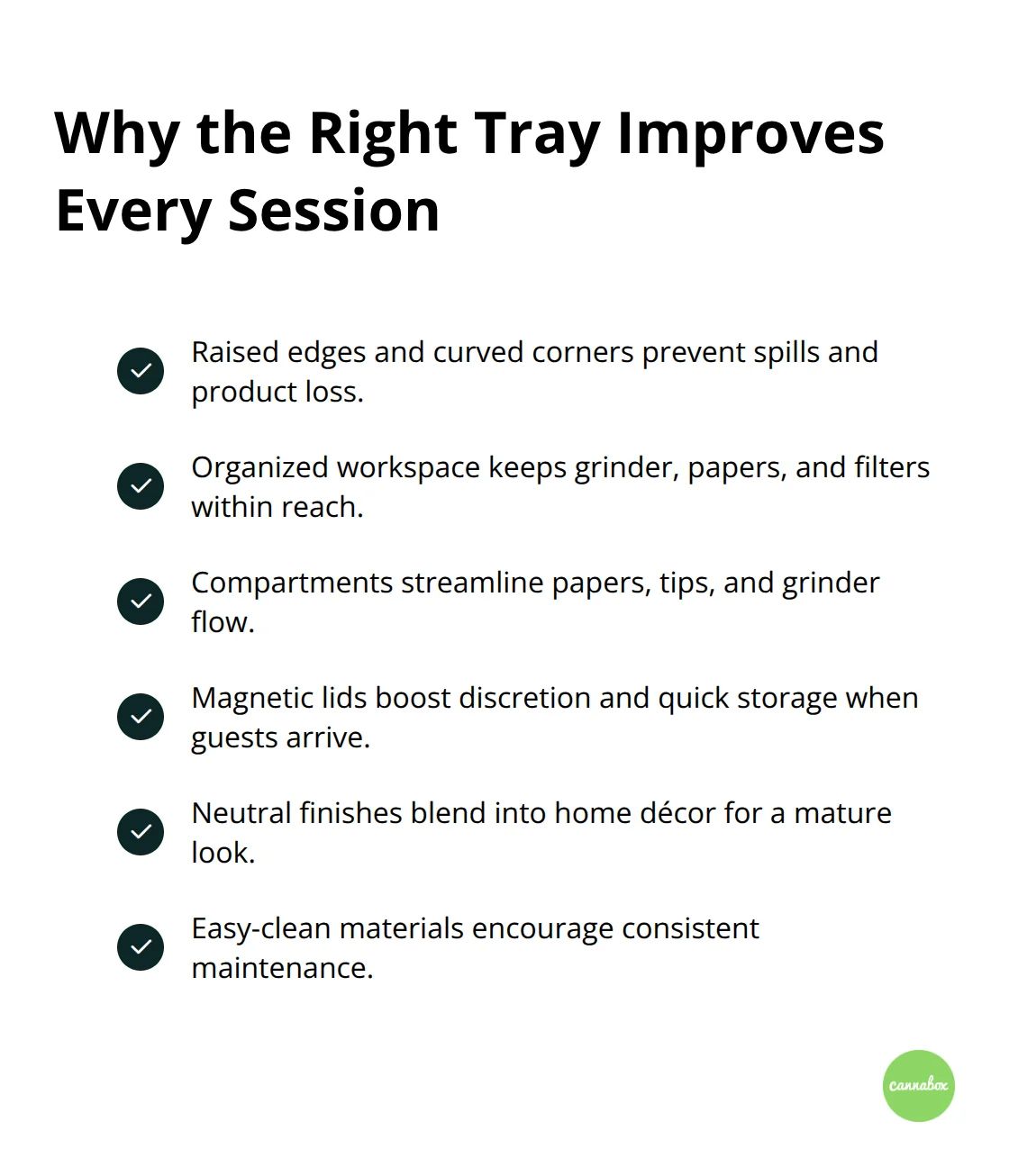
Curved or rounded edges prevent herb from collecting in sharp corners where it becomes unusable. This design choice directly impacts how much product stays in your bowl rather than lost to the tray’s geometry. Raised walls or elevated edges contain spills and make cleanup faster, though the height should allow comfortable manipulation of your grinder and papers. These features work together to minimize waste across your sessions. The difference between a tray with thoughtful design and one without it shows itself after three weeks of daily use.
Compartments and Lids Organize Your Setup
Built-in compartments organize papers, tips, lighters, and accessories in one dedicated space, reducing the mental load of hunting for items mid-session. Magnetic lids or hinged covers add cost but deliver real value if you travel frequently or need quick storage when guests arrive. These features transform a tray from basic surface into an organized system. A well-designed tray maintains organization naturally. A poorly designed one requires constant tidying, which discourages regular cleaning and leads to sticky, grimy surfaces that eventually feel unpleasant to touch.
Neutral Tones Create a Mature Aesthetic
Your rolling setup either blends into your home or announces itself loudly. Neutral finishes like matte black metal or natural wood allow the tray to function as a practical object rather than decor that demands attention. Loud graphics, bright colors, or oversized branding work against discretion and make the setup harder to tidy away quickly. If you share living space or prefer a mature aesthetic, choose simple geometric designs and subdued colors. This choice affects how comfortable you feel keeping your setup visible on a desk or nightstand. A well-designed tray in neutral tones reads as an organized workspace rather than cannabis equipment, shifting perception in your favor.
Session Vibe Shapes Your Material and Size Choice
Consider whether you want your rolling station to feel intimate and personal or social and communal. Large wooden trays encourage group sessions and feel generous. Compact metal trays feel private and focused. Neither is objectively better, but the mismatch between your actual rolling style and your tray’s vibe creates subtle friction that compounds over months of use. The material you select, combined with size and design features, determines how naturally the tray fits into your actual cannabis routine rather than becoming another accessory you rarely touch. With the right tray dimensions and features locked in, the next step involves understanding how to maintain your choice so it performs well for years.
Why a Rolling Tray Transforms Your Sessions
Product Loss Stops Immediately
A rolling tray stops being optional the moment you realize how much product you waste without one. Loose herb that falls on your lap, your table, or the floor vanishes into the void. A tray with raised edges and curved corners keeps everything contained and recoverable. You notice this immediately during your first five sessions-the herb stays put, you use less to achieve the same result, and your surface stays clean. Users who switch to a proper tray report needing less product per session because nothing gets lost to spillage or stuck in unreachable corners. That translates to real savings over weeks and months.
Workspace Organization Eliminates Friction
A standard tray measuring 7 by 11 inches creates enough workspace to organize your grinder, papers, and filters without cramping your movements. Everything sits within arm’s reach, which means you stop fumbling around mid-session or leaving items scattered across your table. The friction disappears when your tools are already where you need them. Compartments amplify this effect-a section for papers, another for tips, and a main surface for grinding keeps your hands moving efficiently rather than hunting for items.
This organization becomes automatic after a few sessions, turning your rolling routine into something you can do without thinking about logistics.
Discretion and Presentation Matter
A tray eliminates the mental burden of keeping your space presentable. When guests arrive unexpectedly, a tray with a magnetic lid closes in seconds and looks like a decorative box rather than cannabis equipment. Neutral finishes in matte black or natural wood read as organized workspace, not paraphernalia. This matters more than people admit-a clean, organized setup feels mature and intentional, not chaotic. You’ll actually feel better using your tray because the entire experience becomes more refined.
Material Choice Drives Maintenance Habits
The material you choose affects whether you maintain your tray consistently. Metal trays clean quickly with warm water and dish soap, which means you’ll actually maintain them regularly. Wood requires more care but ages beautifully if you treat it with cooking oil and mineral oil every few months, creating a piece that feels invested in rather than disposable. Silicone trays clean effortlessly and withstand rough handling, making them ideal if you travel or share your setup with others who might be careless. The durability of your choice directly impacts whether the tray becomes a daily habit or another accessory gathering dust. When cleaning requires minimal effort, you’ll do it consistently, which keeps your setup hygienic and pleasant to use. A grimy tray feels unpleasant to touch and discourages regular use, creating a downward spiral. A well-maintained tray invites you to use it, which reinforces the habit of organized, contained sessions.
Final Thoughts
Choosing the right weed rolling tray means matching three factors: the material that fits your maintenance style, the size that works with your actual rolling habits, and the design that makes you want to use it consistently. Metal trays offer durability and easy cleaning for users who value practicality, while wooden and bamboo options appeal to those willing to invest time in maintenance for aesthetic warmth and sustainability. Silicone provides travel-friendly resilience without the upkeep demands of wood, and the size question resolves itself once you measure your space and consider whether you roll solo or in groups.
A well-chosen weed rolling tray becomes invisible to your routine because everything works without friction. Your product stays contained, your tools sit within reach, and your setup looks intentional rather than scattered. You’ll clean it regularly because the material makes maintenance effortless, which keeps the entire experience pleasant and hygienic.
We at Cannabox understand that quality accessories transform how you actually enjoy cannabis. That’s why we curate monthly boxes with premium rolling trays and complementary gear designed to work together seamlessly-our subscription service delivers 6 to 8 carefully selected items each month, starting at just $19.99, so you can find new tools that genuinely improve your sessions.