

Rice papers rolling has become the preferred choice for many smokers who want a clean, natural experience. These thin, translucent papers burn evenly and add minimal flavor to your smoke.
At Cannabox, we’ve seen countless customers make the switch from traditional papers to rice varieties. Mastering the technique takes practice, but the results speak for themselves.
Which Rice Paper Type Should You Choose
Standard rice papers from brands like OCB and Rizla cost around $2-3 per pack and work well for beginners. These papers measure 1.25 inches wide with medium thickness that forgives mistakes when you roll. Premium options like Elements or Raw Black cost $4-6 per pack but offer superior thinness at 12-30 GSM compared to standard papers. The investment pays off through slower burn rates and cleaner taste profiles.
Paper Dimensions Impact Your Experience
King-size papers at 110mm length accommodate larger rolls while 1.25-inch width suits most users. Ultra-thin papers under 13 GSM require gentle hands but produce minimal ash. Thicker papers above 20 GSM burn faster and create more residue. Most experienced smokers prefer the 13-18 gsm range which balances durability with performance.

Flavor Options You Should Skip
Rice papers come unflavored, which preserves your material’s natural taste better than flavored alternatives. Skip flavored options like strawberry or vanilla – they mask quality and add unnecessary chemicals. The translucent appearance of quality rice papers indicates proper rice starch content, while opaque papers often contain wood pulp fillers that compromise the clean burn rice papers deliver.
Premium vs Budget: What You Get
Budget papers work fine for practice sessions, but premium options justify their cost through consistent thickness and fewer tears. High-end rice papers also feature better adhesive strips that seal reliably without excess moisture. Once you master the basic technique with standard papers, you’ll appreciate how premium options enhance your sessions.
How Do You Roll Rice Papers Without Tearing
Set Up Your Rolling Station
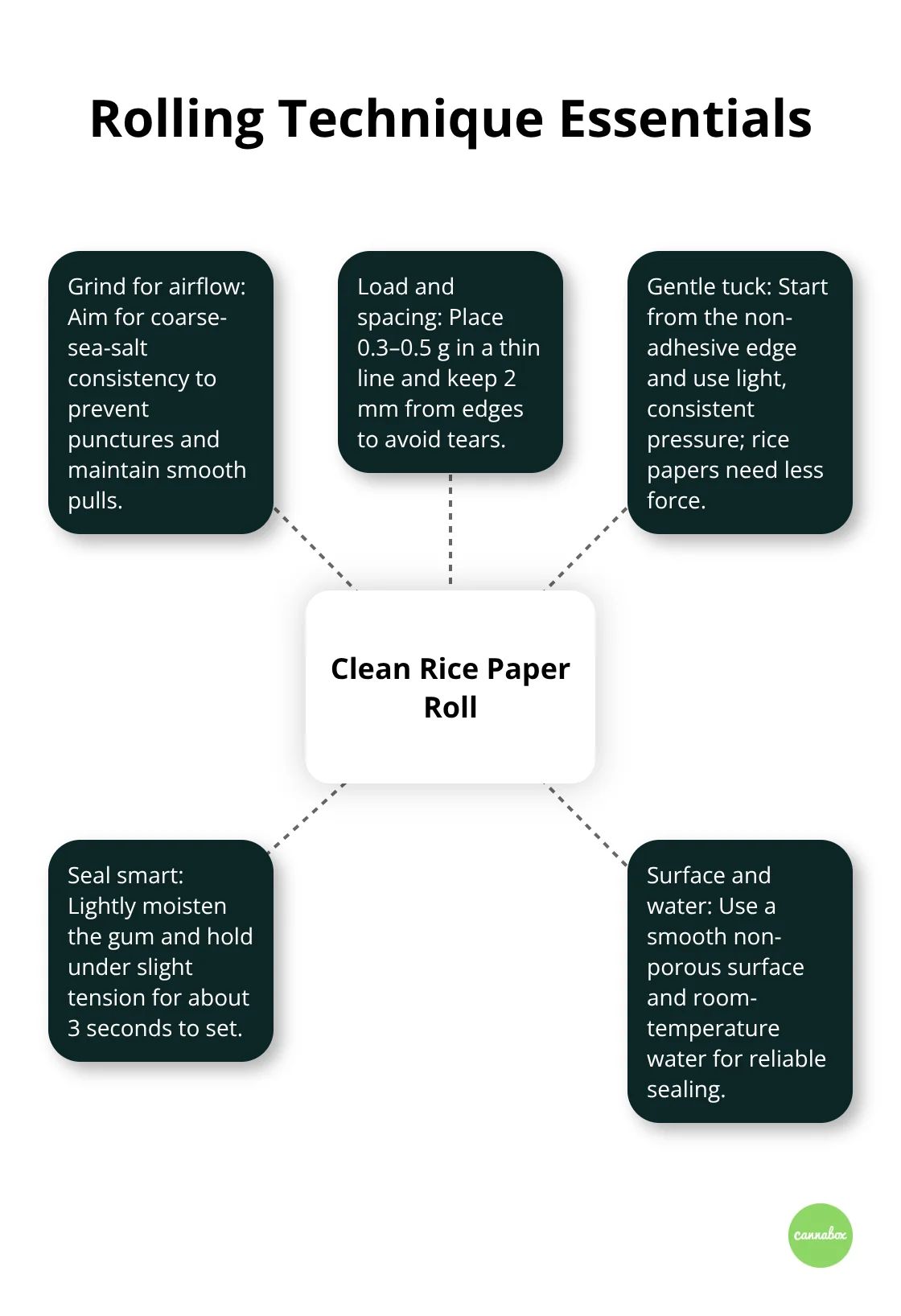
Clean your hands thoroughly and choose a smooth, flat surface like a glass table or ceramic plate. Rice papers stick to porous materials, so avoid wood surfaces that create friction. Keep a small bowl of room-temperature water nearby for sealing – hot water makes papers too fragile while cold water won’t activate the adhesive properly.
Grind your material to a fine, even consistency with a quality grinder. Coarse material punctures thin rice papers, while powder-fine grinds restrict airflow. The optimal grind size resembles coarse sea salt with no stems or large chunks.
Master the Distribution Technique
Place 0.3 to 0.5 grams of material in a thin line along the paper’s center, and stay 2mm from each edge. Rice papers tear with loads above 0.6 grams (unlike hemp papers that handle more weight). This precise measurement prevents the most common failure point that frustrates new users.
Evenly distribute the ground cannabis along the crease of the paper, shaping it into a cone for a smoother burn. Start your roll from the non-adhesive edge and tuck the material inward with your thumbs while your fingers guide the paper over. Apply gentle, consistent pressure – rice papers need less force than standard papers according to manufacturers.
Perfect Your Sealing Method
Lick the adhesive strip lightly with minimal saliva. Too much moisture dissolves the rice starch adhesive, while too little won’t create a proper seal. Roll the sealed edge under slight tension for three seconds to set the bond completely.
The translucent nature of rice papers shows you exactly where your material sits, which helps you spot uneven distribution before problems develop. Even experienced rollers face challenges when they rush this critical step, but patience pays off with consistent results every time.
What Ruins Rice Paper Rolls
The Weight Limit That Breaks Papers
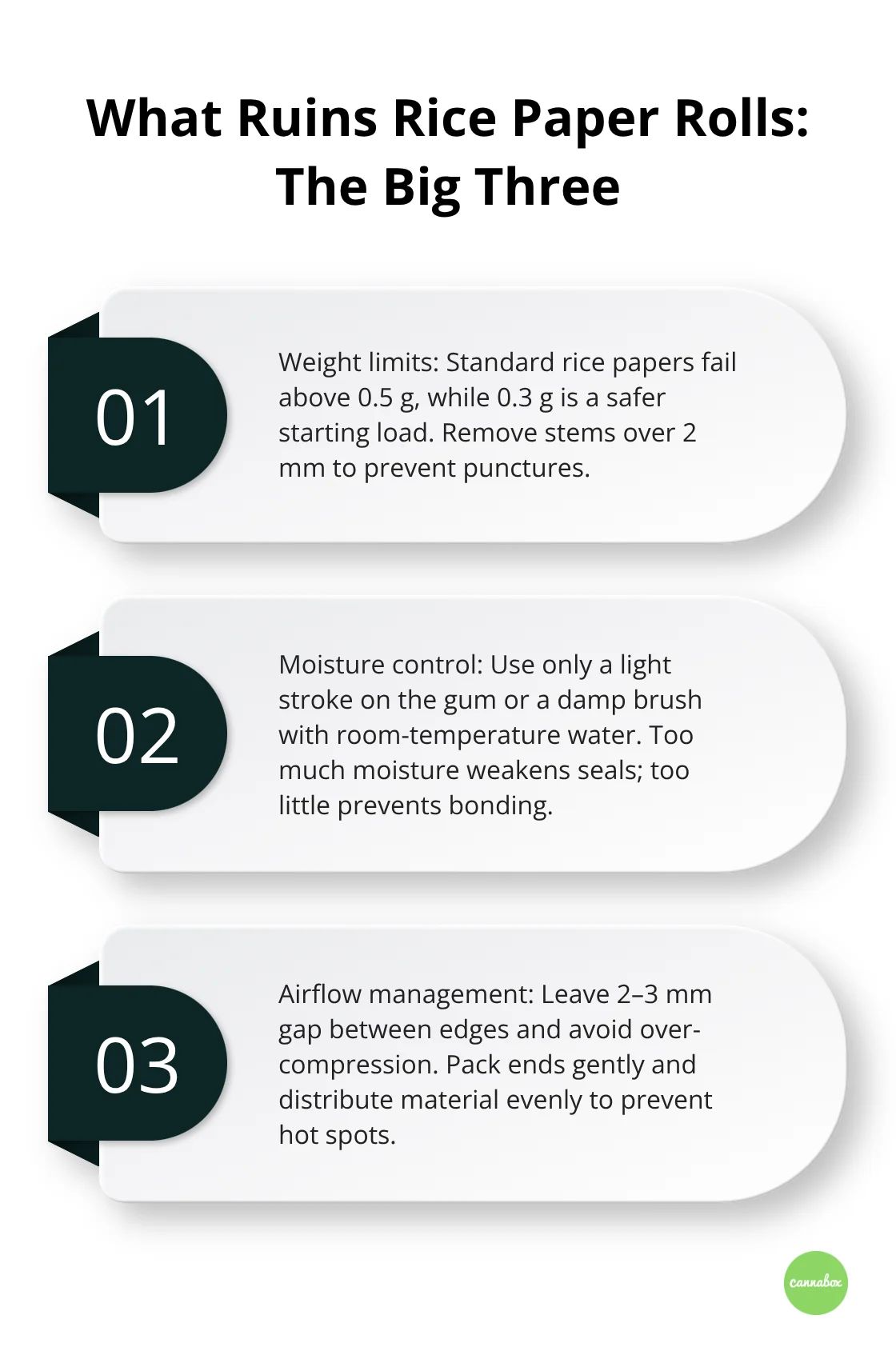
Rice papers fail when you exceed 0.5 grams of material per standard-sized paper. The thin 13-18 GSM construction cannot handle the weight that thicker hemp papers manage. Start with 0.3 grams and add material slowly – this approach prevents the catastrophic splits that waste your materials and papers. Sharp stems cause puncture failures, so remove every piece larger than 2mm before you roll.
Moisture Control That Makes or Breaks Your Roll
Use only the tip of your tongue with a single light stroke across the gum strip. Excess moisture creates weak seals that open while you smoke, while insufficient wetness prevents proper bonds. Room temperature water works better than saliva for consistent results – keep a small brush or cotton swab nearby for precise application. Store unused papers in their original packages with silica gel packets, as humidity above 60% makes rice papers too pliable to roll effectively.
Airflow Issues That Waste Your Material
Tight rolls restrict airflow and create harsh hits that waste your material. Leave 2-3mm of space between the paper edges when you roll – rice papers need less compression than wood pulp alternatives. Pack the ends gently with a thin tool rather than your fingers (which compress too much material into small spaces). Uneven distribution creates hot spots that burn through the paper early, so spend extra time to spread material uniformly before you start your roll.
Final Thoughts
Rice papers deliver superior taste purity compared to wood pulp or hemp alternatives. The thin construction burns slower and produces minimal ash, which preserves your material’s natural flavors without chemical interference. These papers cost slightly more than standard options, but the clean experience justifies the investment for quality-focused users.
Success with rice papers rolling depends on three fundamentals: proper material preparation, controlled moisture application, and gentle handling throughout the process. Keep your workspace clean, grind material to medium consistency, and never exceed 0.5 grams per paper. Light moisture on the adhesive strip creates reliable seals without compromising paper integrity.
Most smokers need 10-15 practice sessions before they achieve consistent results. The translucent material shows exactly where problems occur (which accelerates your learning curve compared to opaque papers). We at Cannabox include premium papers in our monthly subscription boxes alongside other quality accessories.